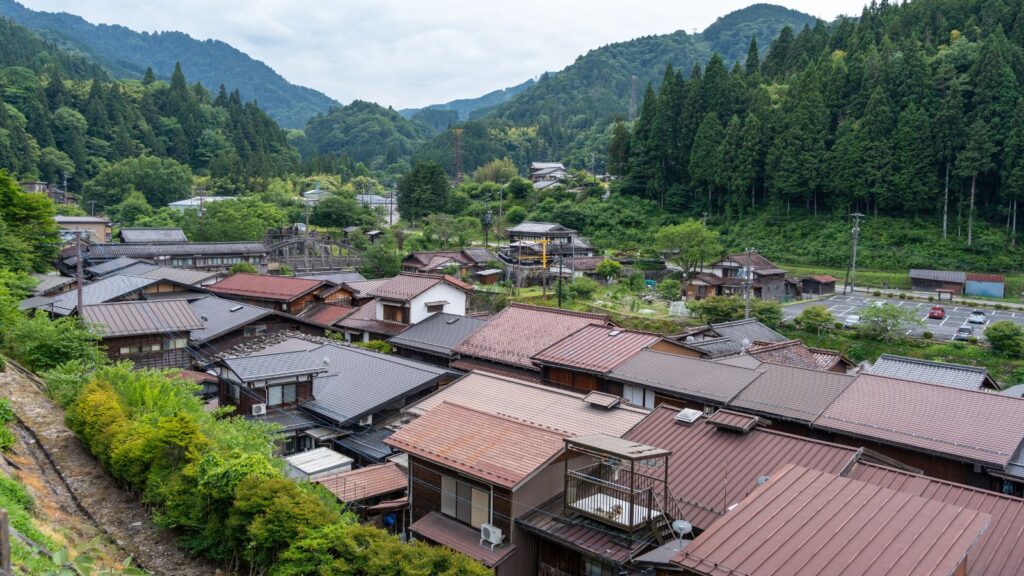
The traditional Japanese village house is what many know as minka. The world is literally translated to people’s house, and this house used to be inhabited by farmers, artisans, and merchants instead of the elite samurai houses. These houses changed a lot over centuries in rural Japan depending on the local climates, available materials, and the lifestyle of the village communities. Today, Minka is one of the most recognizable forms of traditional Japanese architecture.
Traditional Minka Houses
A minka is not just one type of design but it’s more like a broad category of vernacular architecture. All these houses were very different depending on the region. For instance, the farmhouses were found in agricultural villages and called noka. Then there were merchant townhouses which were called machita in cities. Then the fisherman along the coast lived in gyoka.
It was pretty easy to get natural materials for building these houses, which included wood, bamboo, clay, and straw. They used thick timber beams to create the structural frame and all the walls were made with bamboo lattices covered in clay. As for the roofs, it depended on how rich you were and where you lived, whether it was a straw thatch, wooden shingle, or clay tiles.
Minkas had a very practical design. The homes were structured to stand against the local weather conditions. Some mountainous areas had heavy snowfall and the coastal regions had humid summers. For instance, if you went to northern Japan, they lived in the gassho-zukuri style houses which had steep thatched roofs to shed the snow away. You can learn more about these village houses here.
Key Features of a Japanese Village House
Even if the features of minka differed depending on the region, many of them share several characteristics.
One common element found in these houses is doma, an earth-floored area used for cooking, farm work, and entry into the house. Beside it, there’s always a raised living area which was covered with tatami mats and separated by sliding paper doors.
Another unique feature is the irori, a sunken hearth that’s located in the center of the living space. It was used for heating and cooking, but it had another role. Since it was always emitting smoke, that rising smoke preserved the wooden roof structure and kept insects away.
Many minka have other features such as:
- Engawa: a wooden veranda which ran along the outside edge of the house.
- Shoji and fusuma: sliding doors made of wood or paper.
- Deep eaves: extended roofs that protect the interiors from rains and summer sun.
- Open interior spaces which were supported by heavy timber beams.
Together, all these features create a flexible interior layout and connect the house and surrounding landscape.
Where to See Preserved Minka
You might be wondering if you can still see any of these minka houses today. Well, although a lot of them disappeared when Japan became more modern,some of them are still found in museums and villages.
The most suitable place to go to see minka is Shirakawa-go village, a place that has a lot of gassho-zukuri houses. This village and the nearby Gokayama are already slated as UNESCO World Heritage sites, especially since they have been very well preserved.
Another place to go is Nihon Minka-en, an open-air museum that holds a wide range of relocated farmhouses from different areas of Japan. So, visitors can compare the differences in regional styles and construction methods.
There are also individual preserved houses, like Chiiori, a restored farmhouse found in the Iya Valley which has been there since 1720.
Staying in a Minka for Vacation
Most recently, as tourism in Japan becomes more popular, a lot of traditional houses have been restored and converted into guesthouses or boutique accommodations. Many travelers can rent their houses for short stays so they can experience what rural Japanese life was like.
If you stay in a minka today, you can experience sleeping on the futons in tatami rooms, cooking around an irori hearth, and also looking out at the vast countryside from an engawa veranda. It’s these experiences that constantly attract people to these houses.
So, tourism companies and businesses are renovating and reusing traditional houses as guesthouses, cafes, and community centers.
Minka vs Akiya
Many people think minka are the same as akiya, but that’s not true.
An akiya means a vacant or abandoned house. Many akiya are modern homes built during Japan’s late-20th century housing boom but they were left empty because of the population decline and urban migration. Some are old minka, but some are ordinary houses in poor condition.
A Living Cultural Symbol
The Japanese village house isn’t just a building. The minka reflects centuries of rural life, craftsmanship and adaptation to nature. With their wooden structure, tatami interiors, and thatched roofs, their homes are one of the biggest symbols of Japan’s traditional countryside.