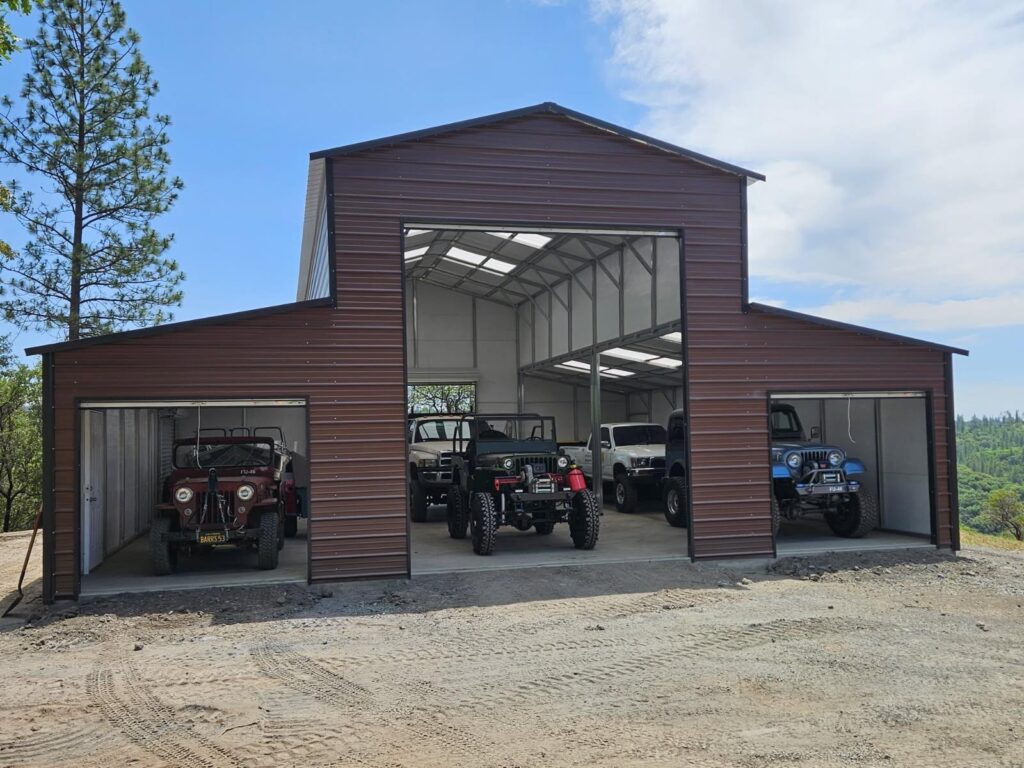
A dedicated building for vehicle storage can solve several problems at once. It can protect vehicles from weather, create more room around the property, and provide space for tools, equipment, and maintenance. The key is planning the building around the vehicles that will actually use it.
Metal buildings are commonly used to store cars, trucks, recreational vehicles, boats, trailers, motorcycles, and work vehicles. While the basic purpose may seem straightforward, several decisions can affect how convenient the building is to use every day.
Start With the Vehicles
Before choosing a building layout, make a list of everything you expect to store inside.
Measure the length, width, and height of larger vehicles. Include mirrors, roof accessories, trailer tongues, hitches, and other components that extend beyond the main body.
If you are storing a truck and trailer combination, think about whether they will remain connected inside the building. That can significantly increase the required depth.
Future purchases should also be considered. If you are planning to buy an RV, boat, larger truck, or additional vehicle within the next few years, including it in the initial plan may prevent the building from becoming undersized.
Plan for More Than Parking Space
The dimensions of the vehicles provide a starting point, but the building needs additional space around them.
Vehicle doors need to open comfortably. People need room to walk between vehicles. You may also want access to the hood, trunk, cargo area, or equipment stored nearby.
A building used for maintenance requires even more working room.
Toolboxes, workbenches, jacks, compressors, shelving, and parts storage can consume a surprising amount of floor space. Planning these areas before construction can help prevent the interior from becoming crowded.
Consider Door Placement Carefully
Garage doors are a major part of a vehicle storage building.
The number, size, and position of the doors should match how vehicles will enter and leave the structure.
Individual doors can provide convenient access when several vehicles are stored side by side. A wider opening may make more sense for larger equipment or situations where flexibility is important.
Height matters as well. Passenger cars may require relatively little clearance, while lifted trucks, RVs, boats, and commercial vehicles can require much taller openings.
The area outside the door is equally important. A trailer may need considerable space to straighten before backing into the building.
Think About the Driveway and Approach
A well-designed building can still be frustrating if access to it is difficult.
Look at how vehicles will travel from the road or driveway to the building. Consider gates, fences, trees, slopes, existing structures, and turning areas.
Trailers and larger vehicles need wider turning paths than passenger cars.
If the property has enough room, providing a generous approach area can make parking much easier. It can also reduce the amount of repeated backing and repositioning required to get equipment inside.
Protect Vehicles From the Elements
One of the main reasons property owners choose metal buildings for vehicle storage is protection.
Sun exposure can damage paint, interior materials, rubber components, and finishes over time. Rain, wind, hail, dust, falling branches, and other environmental conditions can also affect vehicles stored outdoors.
An enclosed building provides another layer of protection while keeping vehicles cleaner between uses.
For valuable, recreational, or seasonal vehicles, this protection can be particularly useful because they may remain parked for extended periods.
Consider the Interior Environment
Storage conditions inside the building deserve attention too.
Ventilation can help manage heat and moisture. Insulation may be appropriate if the building will also function as a workshop or if more stable interior temperatures are desired.
Lighting should be planned according to how the space will be used.
A simple storage building may only require basic overhead lighting. A workshop may benefit from additional lighting around workbenches and areas where maintenance will take place.
Electrical outlets are another consideration. Battery maintainers, power tools, air compressors, chargers, and other equipment may require convenient access to power.
Plan Storage Around the Vehicles
Vehicle storage often leads to equipment storage.
Cleaning supplies, spare parts, tires, tools, helmets, towing equipment, camping gear, and automotive accessories all need somewhere to go.
Wall-mounted shelving and cabinets can keep these items organized without taking up valuable parking space.
Vertical storage can be especially useful in metal buildings because it allows property owners to make better use of the available wall height.
Keep Future Flexibility in Mind
The way a building is used may change over time.
A space originally intended for two cars could eventually hold a truck and boat. A storage garage might become a workshop. A recreational vehicle could be replaced by a taller model.
Building some flexibility into the layout can make these changes easier to accommodate.
That may mean choosing slightly taller doors, leaving additional depth, providing extra electrical capacity, or maintaining an open interior layout.
Plan Around Everyday Use
A successful vehicle storage building should be easy to use, not simply large enough to contain the vehicles.
Think about how often each vehicle will enter and leave, where tools and equipment will be stored, and how much working space is needed.
Good planning can make metal buildings practical for daily drivers, recreational vehicles, work equipment, and long-term storage alike.
By considering vehicle dimensions, door placement, access, interior storage, and future needs before construction, property owners can create a space that remains useful as their vehicles and priorities change.