

Priced out of traditional housing? Here are seven realistic paths buyers are turning to right now, from factory-direct homes and FHA loans to rent-to-own programs.
| Name | Pros | Cons | Pricing / Cost Style |
| Home Nation |
|
|
Varies by model and ZIP; financing via partners |
| Clayton Homes |
|
|
Model-based pricing |
| Vanderbilt Mortgage and Finance |
|
|
Loan-based pricing |
| 21st Mortgage Corporation |
|
|
Loan-based pricing |
| Triad Financial Services |
|
|
Loan-based pricing |
| Rocket Mortgage |
|
|
Mortgage pricing varies |
| Divvy Homes (Managed by Maymont Homes) |
|
|
Upfront contribution plus monthly rent payment with equity credits |
If you’ve spent any time house-hunting in the last couple of years, you already know the math doesn’t add up for a lot of families. Housing prices and closing costs have outpaced what most households have actually managed to save, and the frustration is very real.
But here’s the thing: the traditional route isn’t the only route. New manufactured homes can cost up to 53% less per square foot than comparable site-built homes, which provides meaningful breathing room for buyers who’ve been hitting walls with conventional pricing. On top of that, data from the Mortgage Bankers Association showed applications for new site-built purchase mortgages fell 10% in April, a clear sign of ongoing buyer fatigue. So it’s no surprise that more people are exploring alternative home formats and government-backed lending programs to improve their odds of getting approved.
This guide covers seven paths buyers are actively using when a conventional purchase feels out of reach. Not all of them will fit your situation, but at least one probably will.
What Actually Makes an Alternative Housing Path Work
Finding a workable housing alternative means looking beyond the interest rate and analyzing what the total project will really cost you. Think of it like buying a car: the sticker price matters, but so does insurance, maintenance, and how long you plan to keep it. The strongest options tend to improve affordability in one or more of the following ways:
- They lower the base purchase price of the home itself, not just the monthly payment
- They give buyers with weaker credit profiles a realistic shot at approval
- You’ll need less upfront cash for down payments and closing costs
- There’s a genuine path to ownership, not just temporary relief that kicks the can down the road
- Costs are transparent enough to let you compare total project expenses before committing
And here’s a detail that surprises a lot of people: finding the right lender is just as important as finding the right home. Finance Monthly notes that only 44% of factory-built households hold a mortgage, compared with 95% of site-built buyers. That gap shows how distinct the factory-built lending landscape really is, and it’s exactly why specialized lenders and programs exist to fill it.
Home Nation
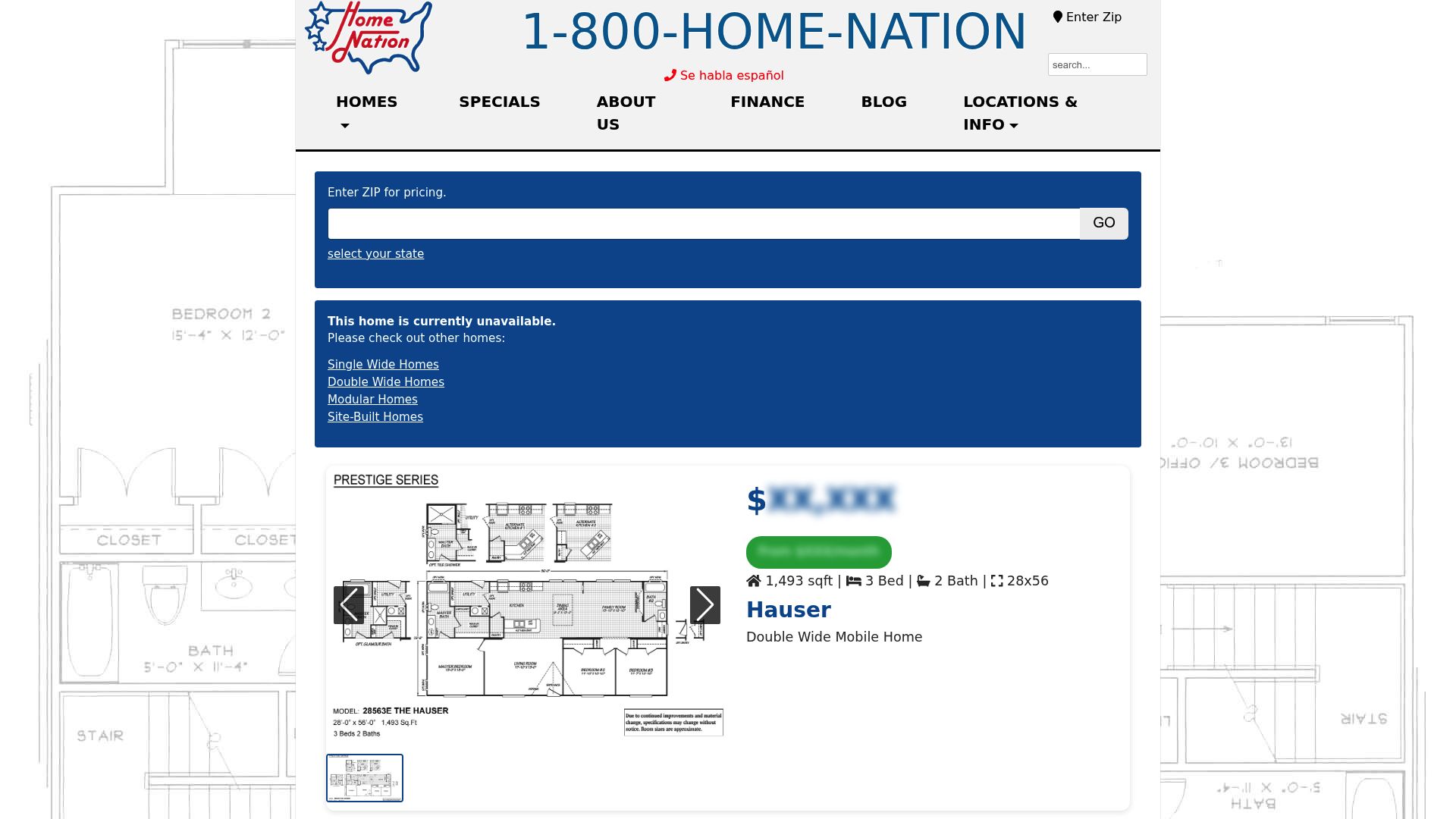
| Housing types | Single-wide, double-wide, modular, and pre-owned manufactured homes |
| Core model | Factory-direct sales designed to reduce standard middleman markups |
| Financing support | Connects buyers to lender partners; pre-qualification tools available |
| Best for | Buyers focused on lowering total project costs efficiently |
Buyers who’ve been shut out of state aid programs often find themselves needing two things at once: a lower-cost housing product and a realistic financing pathway. Modular construction can reduce costs by up to 30% thanks to standardized factory efficiencies and fewer weather delays. Home Nation leans into that advantage by shipping homes directly from factories and skipping the traditional showroom markups that inflate prices for buyers.
If you’re wondering about how can I get financing for a mobile home with bad credit, factory-direct sellers like Home Nation are worth a closer look. The platform connects shoppers with specialized lending partners who may assess income stability, land ownership, and recent payment history, as well as your credit score (not just the number itself). Industry reports also suggest that the average down payment on manufactured homes is closer to 8%, challenging the outdated assumption that you always need 20% down. Sound familiar? A lot of buyers carry that myth around until they actually start the process.
Home Nation supplies single-wide, double-wide, and modular homes, and states that its manufactured units meet federal HUD safety standards. Most homes include a 12-month manufacturer warranty, and upfront ZIP-based pricing visibility often includes delivery. That last point matters more than you’d think; unexpected shipping costs are one of the most common budget-busters in the manufactured home world.
Clayton Homes
| Main housing types | Manufactured homes, modular homes, select site-built offerings |
| Key affordability angle | Often marketed as 30% to 50% less per square foot than site-built |
| Financing access | Affiliated lenders plus third-party land-home options |
| Best fit | Buyers wanting broad comparison shopping across factory-built categories |
Clayton Homes is one of the largest U.S. builders supplying manufactured and modular units through a broad national retail footprint. Finance Monthly projects the manufactured homes market could reach $30.48 billion by 2026, driven by demand for lower-cost housing with modern layouts. Clayton addresses that demand head-on with homes that are consistently priced below traditional site-built alternatives on a per-square-foot basis.
Where Clayton really differentiates itself is through a vertically integrated system: home construction, retail center selection, and affiliated financing all live under one umbrella. Smart Cities Dive notes that reducing development barriers can speed up housing approvals, and Clayton mirrors that principle through standardized factory production. Its manufactured homes follow federal HUD codes, while modular units must meet state and local building requirements, so the regulatory path depends on the product you choose.
Financing routes range from home-only chattel loans to land-home mortgages that may align with FHA, VA, and USDA programs, depending on eligibility. High-performance windows and advanced HVAC systems are available as standard or upgrade options across many models, helping lower long-term energy costs. For buyers shopping around, that’s worth factoring into the total cost of ownership.
Vanderbilt Mortgage and Finance
| Specialty | Financing for manufactured, modular, and tiny homes |
| Core loan formats | Home-only chattel loans and land-home loans |
| Underwriting style | Full-file review evaluating income, collateral, and eligibility |
| Best fit | Buyers in manufactured-home communities or leased-land settings |
Vanderbilt Mortgage and Finance specializes in loans for manufactured, modular, and tiny homes. Why does that matter? Because Finance Monthly reports that manufactured home loan applications face a significantly higher denial rate than conventional home loans. Specialized lenders like Vanderbilt help fill that gap by underwriting property types that most traditional banks won’t prioritize (or, in many cases, won’t touch at all).
The company offers both land-home mortgages and home-only chattel loans for properties sitting in leased-land communities. Borrowers go through a full-file review that examines income, credit history, and debt obligations to determine fixed-rate payment options. If you’re in a state with specific manufactured housing assistance programs, it’s worth checking eligibility before you apply; thousands of housing assistance programs exist nationwide, and the rules vary by state.
21st Mortgage Corporation
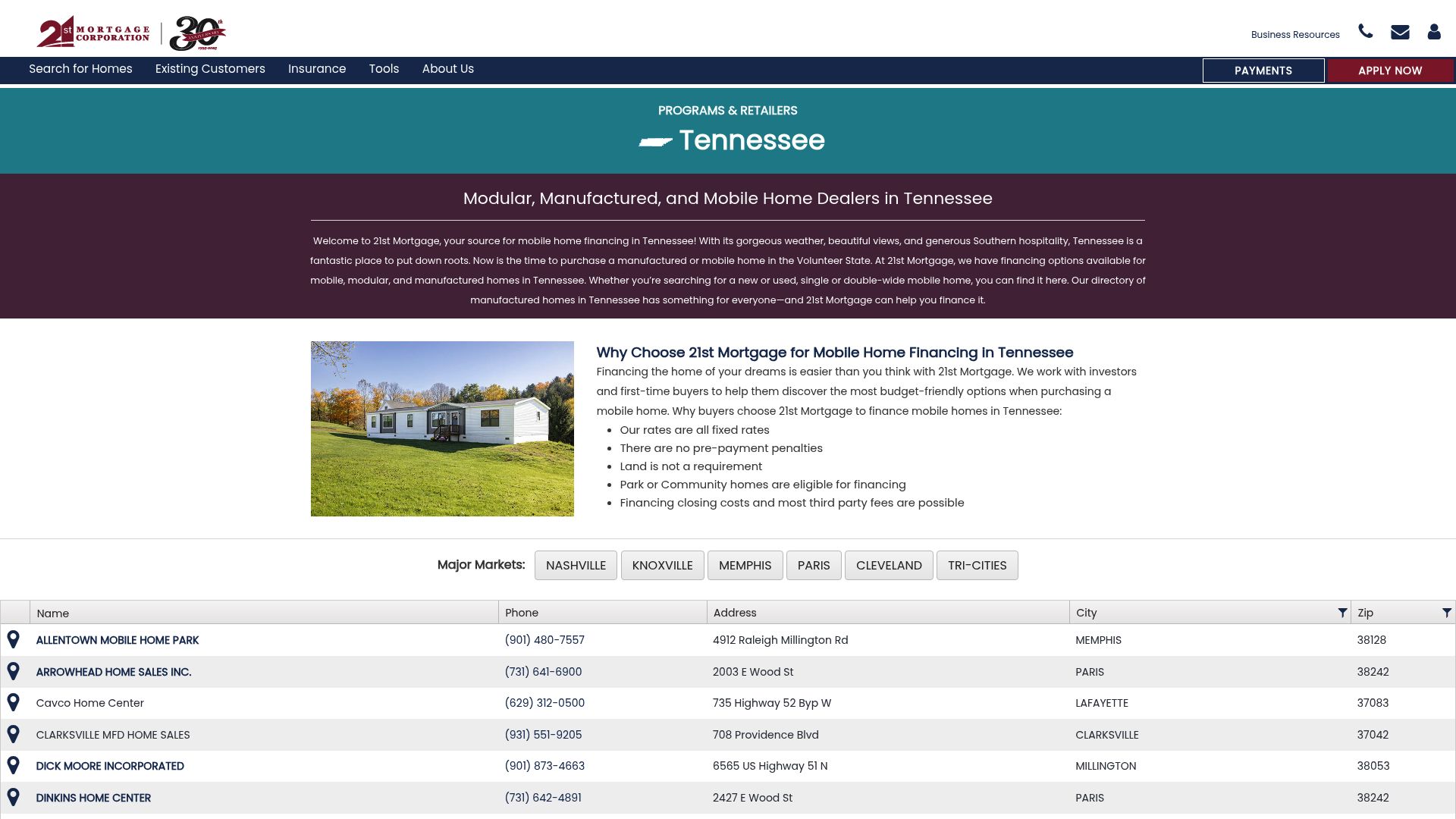
| Focus area | Manufactured, mobile, and modular home lending nationwide |
| Eligible housing | New homes and select qualified pre-owned homes |
| Underwriting approach | Full underwriting using risk-based pricing structures |
| Best fit | Buyers needing community placements or owner-to-owner resale financing |
21st Mortgage Corporation operates nationwide and serves buyers financing both new and pre-owned manufactured or mobile homes. To give you a sense of the demand here: recent housing survey coverage found that one in four Americans believe they’ll never afford a home. That’s a staggering number, and lenders like 21st Mortgage exist precisely for buyers who’ve given up on the conventional route but still want a clear path to ownership.
The company’s underwriting uses risk-based pricing, with factors such as employment stability, rental history, and overall debt levels influencing the terms you’ll receive. Easing down payment barriers could help millions of renters transition into homeownership. While 21st Mortgage still requires down payments, it may approve a range of credit profiles by using compensating factors. In other words, a lower score doesn’t automatically mean a rejection; the lender looks at the full picture.
Triad Financial Services
| Specialty | Manufactured and modular home lending with tailored underwriting |
| Main loan structures | Land-home packages and personal property chattel loans |
| Down payment note | Select programs start around 5% down per company statements |
| Best fit | Borrowers needing personalized file reviews over automated algorithms |
Triad Financial Services brings more than 65 years of experience to manufactured and modular housing finance. That kind of track record matters, especially since many consumers wrongly assume a 700-plus credit score is required for mortgage approval. Triad addresses that misconception directly by offering in-house, non-FHA loan programs that may start with down payments as low as 5%.
The lender generally structures transactions as either land-home packages or chattel loans. With land-home deals, you can sometimes roll the land, home, site preparation, and utility installations into one monthly payment, which simplifies the budget picture considerably. This more personalized review process is particularly helpful for near-miss borrowers, the kind of applicants who don’t fit neatly into rigid automated underwriting models but are creditworthy by any reasonable measure.
Rocket Mortgage
| Program focus | FHA-insured mortgages for primary residential properties |
| Down payment note | 3.5% down for qualified borrowers following FHA rules |
| Costs to flag | Requires upfront and annual FHA mortgage insurance premiums |
| Best fit | Buyers whose main barrier is savings rather than home format |
Rocket Mortgage is a major FHA-approved lender offering government-backed mortgage options for buyers with limited savings. Rocket states that qualified FHA borrowers may be able to buy with as little as 3.5% down. The company also publicly lists a 580 minimum credit score overlay for its FHA loans, which gives applicants a clear benchmark before they even begin the application process.
So what does this actually look like on the back end? National Mortgage Professional reported that HUD will continue to use tri-merge credit reports, which affects how lenders evaluate borrowers’ creditworthiness. That means Rocket may rely on cross-bureau data when reviewing borderline debt-to-income ratios. Buyers should still budget for both upfront and annual FHA mortgage insurance premiums, along with standard closing costs; those add up faster than most first-time buyers expect.
There’s a catch worth knowing about, though. Recent market coverage has highlighted a rise in FHA foreclosures after pandemic relief programs ended. If you’re considering an FHA loan, focus on long-term payment sustainability, not just whether you can get approved today. Ask yourself whether you could still make the payment if interest rates shifted or your income dipped for a few months.
Divvy Homes (Managed by Maymont Homes)
| Model | Institutional rent-to-own portfolio with a path to purchase |
| Ownership path | Tenant buys the home later using accumulated equity credits |
| Flexibility | Right to purchase the property, not a strict obligation |
| Best fit | Renters building up mortgage readiness who want a structured corporate path to ownership |
Divvy Homes offers a rent-to-own bridge strategy for households that need more time to become mortgage-ready, though the platform looks a bit different today than it did during its early rapid-growth years. Following a massive $1 billion acquisition by a Brookfield private real estate fund, Divvy’s platform and single-family portfolio are now operationally managed by Maymont Homes. Over its lifespan, the model has helped more than 15,000 residents move into homes, ultimately creating over 2,000 successful homeowners.
While surging interest rates caused the platform to shift away from aggressive, unconstrained open-market homebuying, it remains a major institutional player in the single-family rental space. Under its current structure, all tenant purchase paths and equity options are fully preserved and honored.
The day-to-day mechanics remain practical: a portion of each monthly payment accrues as an equity credit that can be applied toward a future down payment when you are ready to secure a mortgage. Divvy has also increasingly partnered with builders to absorb stalled new-construction units, giving renters access to modern, energy-efficient properties. This model is highly beneficial for self-employed individuals or those waiting for past credit marks to age off their records. However, the trade-off remains: all-in monthly costs can outpace those of a traditional mortgage, so buyers must carefully evaluate their future buyout price before signing the lease.
The New Math of Homeownership
For a lot of middle-income households, the smartest move isn’t stretching dangerously for a site-built house. It’s choosing an alternative path that lowers financial risk while still building toward real ownership. Take a hard look at your main constraint, whether it’s price, credit score, or timing, and pick the financing structure that genuinely fits your long-term goals, not just the one that gets you through the front door fastest.



