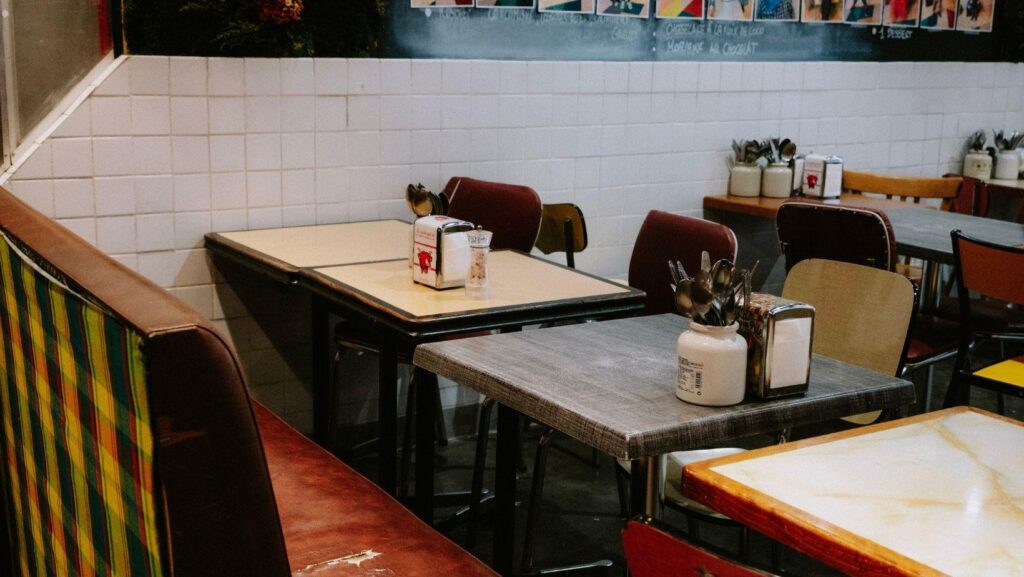
Every dining room hides a number that never appears on the menu: the cost of the floor itself. Rent, property taxes, heating, lighting, and nightly cleaning are all charged per square foot, so each seat has to earn back the space it occupies. Operators feel this sharply during a build-out or a renovation, then tend to forget it the moment the furniture is delivered, and the room finally looks finished.
Seating is where that forgetting gets expensive. Loose chairs feel flexible and inexpensive, yet they quietly leak space in ways most floor plans never account for. Thoughtfully placed restaurant booths can do the opposite and pay for their footprint twice, first through the covers they hold and again through the way they nudge guests to relax, linger, and order one more round. That second payoff almost never shows up in a product photo. It surfaces months later, in revenue per square foot.
The Hidden Math of a Square Foot
Booths borrowed space; the room was about to be wasted. Push a bench against a wall and a dead perimeter becomes paying seating. A freestanding table ringed by chairs has the opposite problem, because it needs clearance on all four sides so guests can pull a seat out, sit, and rise again without knocking the table behind them.
Most layout guides budget 18 to 24 inches of pull-out room per chair, then add an aisle on top of that. Spread across forty or fifty seats, the lost area is enough for several more tables. A banquette, the upholstered bench many guests simply call a booth, erases most of that waste on at least one side and sometimes two. The wall does the work that a circulation gap used to do.
Same Bench, More Covers
Capacity is the part that owners notice first. A run of booths along a wall packs more guests per linear foot than the same wall lined with four-tops, and it does so without making the room feel tight. Benches also flex with party size in a way that fixed chairs cannot. Two guests slide toward the middle, a group of five squeezes in cheerfully, and a parent parks a stroller at the open end instead of blocking an aisle.
That flexibility protects the floor during a rush. When a host can seat a four-top and a two-top in the same booth that run within minutes of each other, fewer seats sit empty waiting for the perfect party to walk through the door.
Why Guests Linger Longer, and Spend More
There is a behavioral reason that booths outperform, and it has a name. The study of how people use personal space, proxemics, shows that diners settle in when one side is enclosed and their backs feel protected. A booth delivers exactly that: a defined edge, a sense of ownership, and a little acoustic shelter from the table next door.
Comfortable, semi-private guests behave differently. They stay past the last bite, scan the dessert list, order a second coffee, and feel less rushed to surrender the table. Longer, more relaxed visits raise the average check, and a higher check per square foot is the whole game.
The Chair’s Real Advantage, and Its Price
None of this means chairs lose. They earn their keep precisely because they move. A floor of loose seating reconfigures in seconds for a private party, a large reservation, or a slow Tuesday that calls for a tighter, cozier center. Chairs also cost less up front and are simpler to repair or replace one at a time.
The catch is what that movement costs in space and in discipline. Every chair needs its clearance, every reconfiguration needs staff, and the flexibility that helps on an event night can read as wasted square footage on an ordinary one. Chairs reward rooms that turn tables quickly. Booths reward rooms that want guests to settle.
Reading the Floor Before You Buy
The smartest move is to measure before falling for a look. A short audit of the room usually reveals where the benches will be placed and where chairs should stay:
- Map the dead perimeter, every wall, nook, and window line that could carry a bench instead of a walkway
- Count how many covers each layout yields, not just how many tables fit
- Track which sections turn fast and which hold guests the longest
- Note where strollers, walkers, and larger parties currently jam the aisles
- Check local fire and accessibility clearances before committing to a fixed run
Numbers gathered over a couple of busy services tend to argue more convincingly than any showroom visit.
Designing the Mix, Not Picking a Winner
Most rooms that hum financially do not choose one side. They line the perimeter with booths to maximize wall space and encourage long stays, then fill the center with chairs that flex to whatever the night demands. Manufacturers design the two to coordinate for this reason, so a bench, a freestanding table, and a matching chair can share a single finish and visual language.
Handled well, the mix gives a room both a stable, high-margin edge and a movable core. The booths anchor the revenue. The chairs absorb the surprises.
Where the Floor Pays You Back
Square footage is the one cost a restaurant can never renegotiate mid-lease, so the furniture sitting on it has to carry real weight. A chair holds a guest. A well-placed bench holds a guest, reclaims a wall, shapes how long that guest stays, and quietly lifts the check while it does.
That is why a booth keeps earning long after the renovation budget closes. Choose seating based on what each piece returns per square foot, rather than by what it costs on the invoice, and the floor starts working for the business instead of the other way around.