Plenty of people would happily start a content side hustle if it didn’t involve being visible. Colleagues find these things. Family members share them. And a surprising number of otherwise confident adults simply hate watching themselves on screen. So the idea gets abandoned at the first hurdle, not because the person lacks knowledge worth sharing, but because the format seemed to require a face and a ring light. That assumption is now out of date, and the change has quietly opened content creation to a large group of people who ruled themselves out years ago.
The Visibility Barrier Is Bigger Than People Admit
Ask anyone who has considered starting a channel why they didn’t, and camera anxiety comes up far more often than time or equipment. It’s rarely framed as fear. It’s framed as practicality — the house is messy, the lighting is bad, there’s never a quiet hour.
Underneath, it’s usually about exposure. Posting yourself online is permanent in a way that unnerves people with ordinary jobs and ordinary privacy preferences. Voiceover-only formats exist, but they limit what you can make, and text-on-screen content has a low ceiling on most platforms now.
The workaround that emerged is more flexible than the old faceless approaches. Pollo AI’s AI Avatar Generator builds a speaking, moving on-screen presenter from one photograph, with no camera, no crew and no filming session involved. Because it will animate an illustrated figure or a cartoon character just as readily as a real person, you can host your own content through a drawn persona and never appear yourself, while still getting the eye contact and expression that make short video hold attention.
Why Consistency Beats Production Quality
Anyone who has watched creators grow over a few years notices the same thing. The accounts that succeed aren’t usually the best-looking ones. They’re the ones still posting in month fourteen.
That’s an unglamorous truth, and it reframes what actually matters when starting out. Equipment upgrades feel productive but change very little. Publishing twice a week for a year changes everything, because the algorithm rewards reliability and audiences form habits around it.
Removing the setup ritual matters more than it sounds. When making a video requires tidying a room, finding decent light, and psyching yourself up, most people produce content only when circumstances align. When it requires writing a script and pressing a button, it becomes something you can do in a lunch break. The bottleneck stops being motivation and starts being ideas, which is a much healthier place for a side project to sit.
Which Side Hustles Suit This Format
Not everything works without a real person. Fitness demonstrations, cooking, makeup application and anything requiring physical technique need genuine footage and always will.
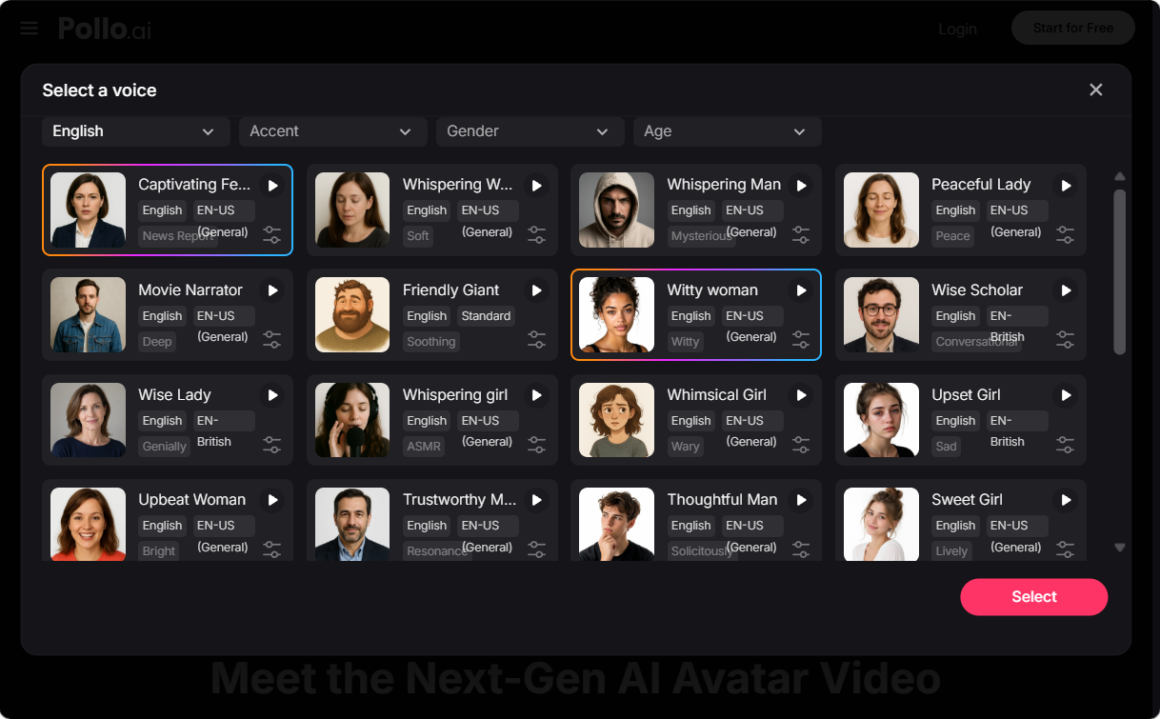
What suits a presenter-led faceless approach is anything explanatory: personal finance breakdowns, software walkthroughs, language learning, book summaries, local history, career advice, hobby deep-dives. These are also, conveniently, the niches with the strongest affiliate and sponsorship economics, because the audiences are researching rather than browsing.
The other advantage is separability. A persona-led channel isn’t tied to your name, which means it can eventually be handed over, sold, or simply left behind if your interests change. Personal brands are much harder to exit.
When You Already Have Something Written
A fair number of people starting this way have an existing blog, a newsletter archive, or a folder of documents from a previous project sitting unused.
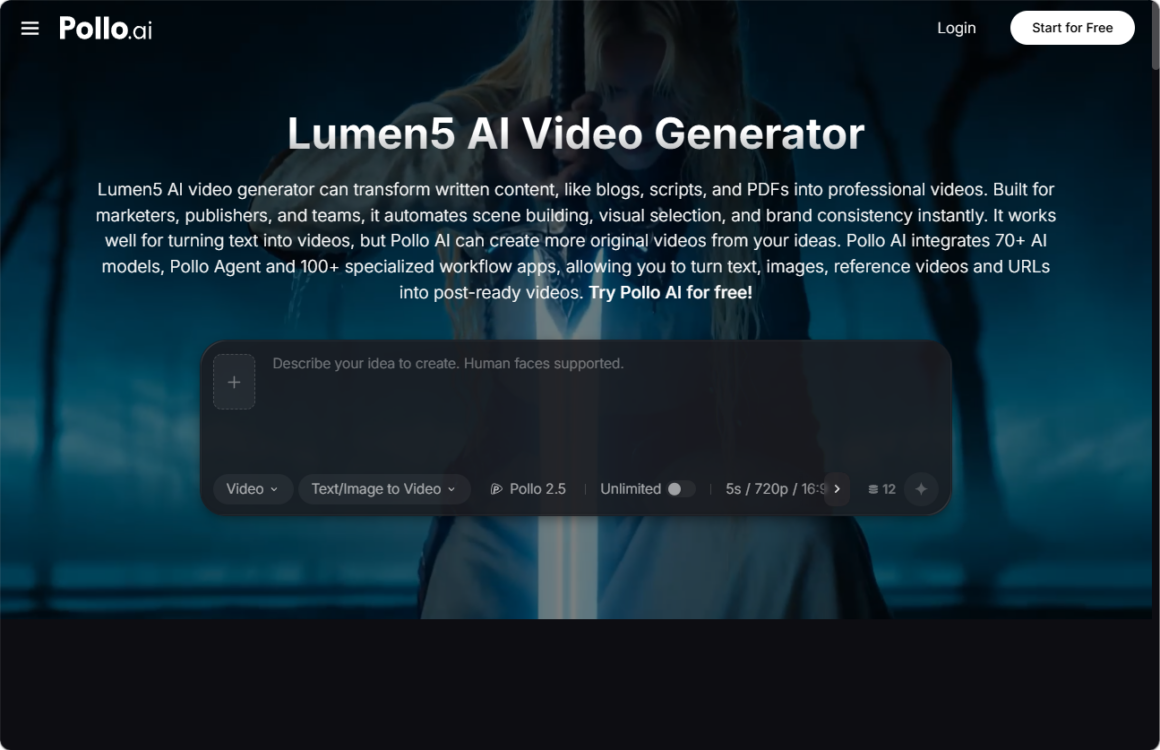
Lumen5 AI Video Generator is aimed squarely at that situation and works as a companion to what Pollo AI handles. It takes written material — an article, a PDF, a web page link — and constructs a video from it, pulling matching footage and music from a large media library, laying in an AI voiceover or on-screen presenter, and offering narration in over forty languages. Custom brand templates keep everything looking consistent across a series without design work.
For someone with fifty old blog posts, that’s the fastest possible route to a back catalogue of video, and it costs nothing in new writing.
Setting Up a Faceless Channel at the Weekend
Pick a Narrow Topic You Can Sustain for a Year
The most common failure is choosing something broad enough to be safe and boring enough to abandon. “Personal finance” is too wide. “Getting out of debt on a low income in the UK” is specific enough to attract a real audience and specific enough that you’ll keep having things to say. Write down thirty video titles before you make anything. If you struggle past fifteen, the topic is too narrow or you’re not actually interested in it.
Design a Presenter You Won’t Want to Change
Settle on one persona and stick with it. An illustrated character, a stylised figure, whatever fits the subject. Using Pollo AI’s AI Avatar Generator, clips can run up to two full minutes with natural gestures worked in — pointing at something, holding an item up, a small approving nod — which is enough to carry a complete explanation rather than a fragment. Changing your presenter every few weeks resets the recognition you’re trying to build.
Batch Four Scripts Before Filming Anything
Write four complete scripts in one sitting, then produce all four in a second sitting. Batching by task rather than by video removes the mental restart that makes single-video production feel so much slower. Four scripts is roughly a month of content at weekly cadence, which is the point where a habit starts to form.
Track One Metric and Ignore the Rest
For the first three months, watch retention in the opening fifteen seconds and nothing else. Subscriber counts fluctuate for reasons you can’t control. Early retention tells you directly whether your opening line works, and improving it is the single highest-leverage change available to a beginner. Everything else can wait until you have data worth reading.
A Realistic View of the Payoff
It’s worth being honest about the timeline. Most channels earn nothing for six months, then very little for another six. The people who make money from content creation as a side income overwhelmingly did so after building a body of work, not after a lucky video.
What has changed is the cost of trying. Whether someone repurposes an old blog archive through Lumen5 AI Video Generator or builds a persona-led channel from scratch, the entry cost is now measured in hours rather than equipment budgets and confidence.
That mostly benefits people who had something to teach and no appetite for being watched. There are more of them than the current creator economy would suggest.