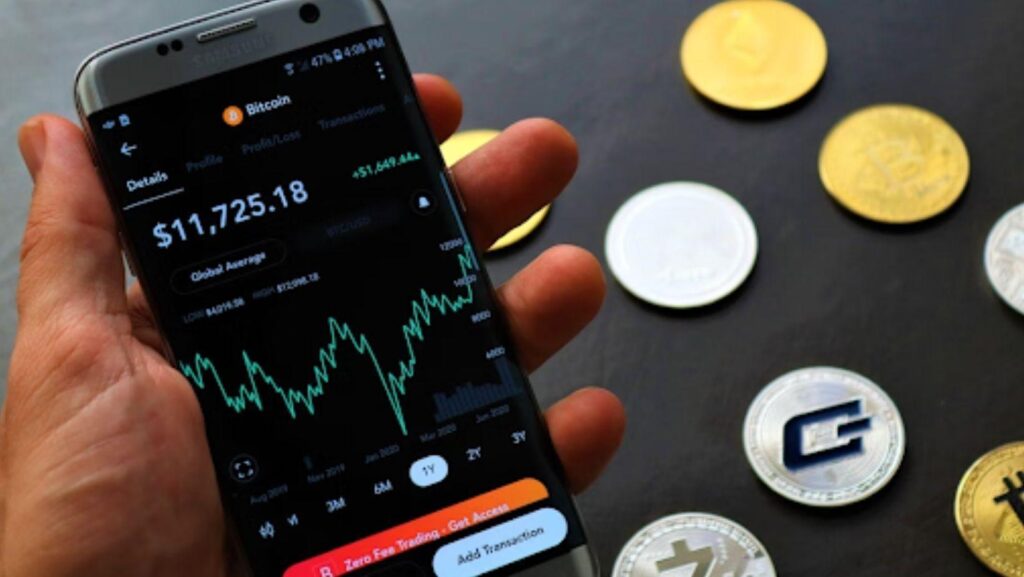
New apps, cards, or currencies do not represent the biggest change in digital payments. Instead, the boundaries between these options are disappearing. People now expect to move money between bank accounts, mobile wallets, and digital asset platforms as easily as they share information online.
This expectation is changing what digital wallets do. Previously, they served solely for money storage or limited payment processing. Now, they are becoming a way for people to reach different financial networks. True advancement lies not within the wallet, but within its supporting structures.
Wallets are becoming financial control panels
Early digital wallets reproduced the functions of a physical wallet. They stored card details, loyalty passes, or a balance that could be spent within a particular ecosystem. Their usefulness depended on how many merchants accepted them and how easily users could add or withdraw money.
These latest wallets possess enhanced flexibility. A single app can link to your bank account, payment cards, rewards, and digital assets, letting you choose how to pay for each transaction. This wallet operates more like a financial dashboard, not simply storage.
This shift matters because people think about payment infrastructure when making a purchase or sending money. They care about the amount, the recipient, the cost and the expected arrival time. Whether the transaction travels through a card network, a bank transfer system or a blockchain is secondary unless that choice affects the outcome.
The best payment systems keep most of this complexity hidden. Rather than asking customers to learn about each network, they select or combine the right systems in the background.
Domestic payments have raised expectations
The experience of moving money within national borders has improved. In the UK, Faster Payments and other remote banking methods accounted for 5.6 billion transactions in 2024, while 75 per cent of adults used mobile banking. Half of the payments made by UK businesses that year travelled through Faster Payments.
These systems have changed what people consider normal. A transfer made from a banking app is often expected to arrive within seconds, including outside traditional branch opening hours. Open banking has extended that expectation by enabling regulated services to start account-to-account payments without relying entirely on cards.
This has set a higher standard. When money moves quickly and clearly within a country, delays in other situations stand out more. A transfer that takes days, goes through several steps, or only shows the final cost after currency conversion can seem outdated, even if the process is complicated.
Digital wallets are helping close this gap by combining an easy-to-use interface with access to more payment systems.
The real difficulty begins at the border
Cross-border payments are still harder to modernize than payments within one country. They can involve correspondent banks, currency exchange providers, local clearing systems, compliance checks, and organizations in different time zones. Each extra step can add cost, delay, or uncertainty.
Research from the Bank for International Settlements shows that limited interoperability is a major barrier for international payments. While domestic systems function independently, their integration with international networks presents challenges. Differences in technology, rules, and institutional setup make the problem worse.
So, faster technology by itself cannot fix every problem. A blockchain might settle an asset right away, but the recipient may still need local currency in a regular account. Similarly, a swift local payment system offers little utility without international system linkage.
Exchanging one system for another doesn't capture the essence of this new solution. Instead, it is to build ways for different types of money to move between systems through conversion and interoperability layers.
Crypto is becoming part of the payment bridge
Digital assets first grew outside of traditional banking. Users sent tokens between blockchain addresses, while changing them into national currency was a separate step handled by exchanges or special providers.
A different model is now appearing. Services that allow users to transfer crypto while the recipient receives local currency in a bank account or supported digital wallet illustrate how the two infrastructures can be joined. Crypto functions as one part of the transfer route, while familiar banking rails provide the final delivery.
This hybrid structure is more significant than the idea of a completely separate crypto economy. It recognises that users may value the reach or continuous availability of blockchain networks but still need to pay rent, settle invoices, or support relatives in currencies accepted by local institutions.
Stablecoins are important because they are meant to keep a steadier value than other cryptocurrencies. Still, their role is limited. The Financial Stability Board estimated stablecoins made up less than 0.2 percent of all cross-border payments in 2025. It suggested their main value might be in hybrid systems that work with bank money and foreign exchange, rather than as stand-alone global payment networks.
Convenience depends on trust
Linking wallets and banks brings new opportunities, but also additional responsibilities. Even with an easy-to-use interface, there is still a need for identity checks, fraud monitoring, consumer protection, and clear details about fees and exchange rates.
Traditional payment systems have rules for handling mistakes, disputed card charges, and institution failures. Digital asset transfers can be fast, but they often give fewer ways to fix errors. The challenge is to keep things efficient without losing the protections people expect from regular financial services.
Regulation will shape how this balance develops. The Bank of England has described a possible future where commercial bank deposits, stablecoins, tokenized assets, and maybe a digital pound all exist together in a 'multi-money' system. Interoperability is key, since different types of money must be easily exchanged without extra hassle or loss of value.
The next stage may be almost invisible
People often talk about payment evolution as a competition between banks, fintechs, and decentralized networks. In reality, the bigger story may be how they are coming together. Banks offer trusted accounts and access to local payment systems. Wallets make things easier for customers. Blockchains provide another way to move and manage value. Whether these parts can work together depends on interoperability.
For most people, progress may not seem dramatic. It could just mean being able to send money from whatever assets they have to the recipient's account, with clear information about cost and delivery time before confirming.
This simple experience will depend on more complex systems behind the scenes. The best payment systems will handle this complexity without making things harder for users. As wallets connect with banks instead of competing with them, the real question becomes whether money gets to the right place safely, reliably, and at a fair cost.