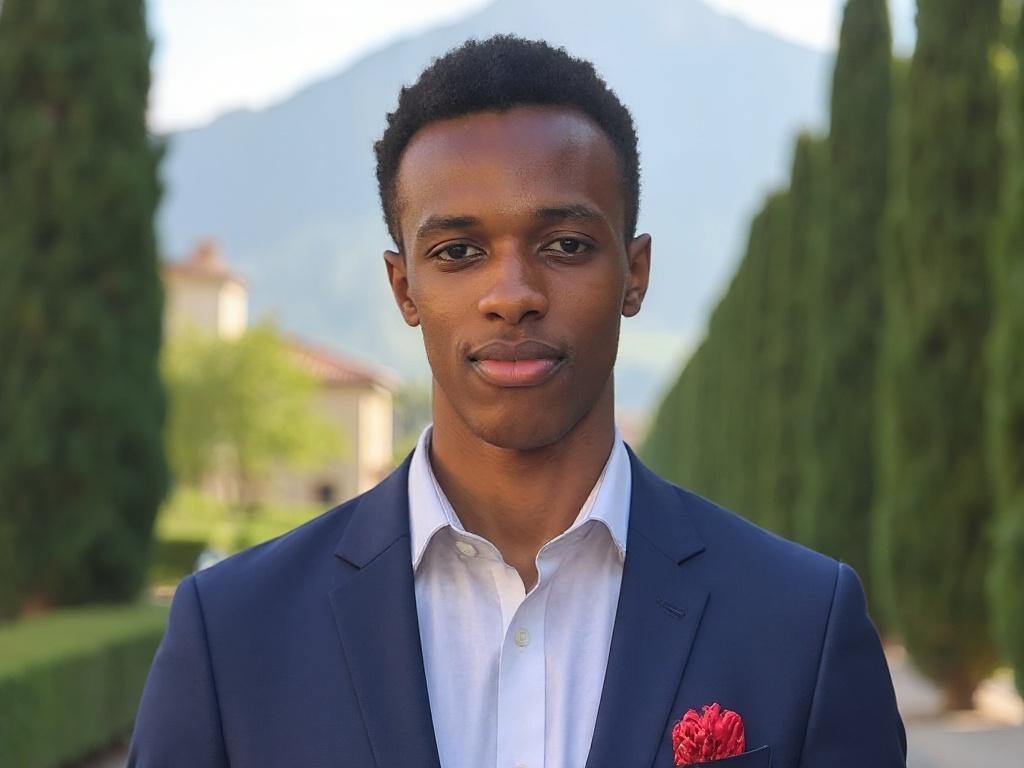
The picture you’re looking at is not real. It’s an AI-generated headshot built based on real selfies uploaded by a real person. AI headshots have been growing in popularity in recent years, but they’re far from consensual. Some people believe they democratize job recruitment by allowing everyone to have a pro-level headshot; others think they misrepresent candidates, giving way to false expectations.
So, are AI headshots a job-market leveler or a new form of online catfishing? To shed some light on the issue, we have reached out to four experts who have a direct stake in the subject: an online recruiter, a professional photographer, an online freelancer, and an AI researcher. But first…
How Do AI Headshots Work?
The image above was generated using HeadshotKiwi, an AI headshot generator for freelancers and teams that follows the standard generation process:
- Clients upload real selfies of themselves;
- The AI uses the selfies as the source material;
- Clients get up to 250 AI-generated headshots in under one hour.
Generally, the models used are also trained on real headshots and offer industry-specific background and attire. The AI headshots are available for download and can be edited in and outside the AI generator.
How Do Experts Feel About AI Headshots?
To cut through the noise and understand more broadly how AI headshots are perceived today, we have contacted four direct stakeholders: an online recruiter, a studio photographer, a freelancer, and an AI researcher. Do they believe AI headshots should be used in a professional context? And can they truly be the future of professional headshots?
Joanna Oliveros, Staffing Recruiter, 34: “Some AI headshots are indistinguishable from real ones, even for a trained eye.”
“I spend most of my workdays browsing through endless resumés and online job applications, and AI is everywhere. When I see a non-personalized cover letter that was obviously written by ChatGPT, I don’t like it, but I don’t have the same issue with AI-generated headshots. To a staffing recruiter, AI headshots are, at least, a sign that the person took the time and money to improve their chances of getting the job. I’ve seen some strange photos, but some AI-generated headshots are indistinguishable from real ones, even for a trained eye. Moreover, they’re just another tool job applicants have for reinforcing their visual image; I don’t agree with some of my co-workers, who find AI headshots to be misleading. That would be the same as saying makeup, or even wearing professional attire, are misleading tactics.”
Peter Ashton, Studio Photographer, 58: “I value authenticity too much to believe AI headshots are the future.”
“The generators have the argument that you save money [compared to studio headshots], but that’s ridiculous because the product cannot be compared. On one hand, you have real photos taken by a professional and full control over how the headshot looks; on the other, you have a machine “guessing” how you look and putting bits and pieces together to create something that is not an accurate representation of reality. As an artist and someone who’s been involved with professional headshots for over 20 years, I value authenticity too much to believe AI headshots are the future, but maybe it’s just me being hopeful…”
Erin Nowak, Freelancer [Digital Marketing], 27: “I like that my LinkedIn finally has a nice, presentable photo.”
“I changed my old LinkedIn profile picture for an AI headshot, and, so far, nobody complained. I can’t say I’ve been getting more or fewer requests, but I like that my LinkedIn finally has a nice, presentable photo. I was always camera-shy and not a very good photographer either, so it’s a blessing.”
Pedro Hernández, AI Researcher, 37: “The fact is: professionals are intentionally embracing AI-generated images of themselves.”
“AI headshots are a byproduct of the AI boom, but they do speak highly of the visual appeal of AI-generated imagery. The fact is: on both sides of the recruitment process, professionals are intentionally embracing AI-generated images of themselves because they believe they look better, offer a competitive advantage, or any other reason. As someone who investigates AI and its effects on social dynamics, it’s interesting to see how rapidly people have embraced AI to write their letters, generate their headshots, and so forth. Essentially, they’re giving up their agency in favor of the AI, allowing it to act or communicate on their behalf.”
When You Should (and Shouldn’t) Use an AI Headshot
According to staffing recruiter Joanna Oliveros, you should go for AI headshots if you don’t have access to a good real headshot. Research shows that LinkedIn profiles with photos get “14 times more views than those without“, so the rule of thumb is: an AI headshot is better than no headshot.
- Recruiters choose AI headshots over real headshots 76.5% of the time, but…
- 66% say they would “be put off” if they recognized the headshot as AI.
This means that selecting the most realistic AI headshot is essential. Potential recruiters should look at it and think, “What a professional headshot”, not be distracted wondering whether the headshot is AI-generated or not.